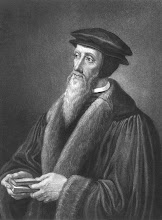
Jonathan Edwards, born on the 5th of October, 1703 in East Windsor, to Timothy Edwards, a Harvard-trained clergyman, and Esther Stoddard, descended from one of the most prominent families in Connecticut, of whom Jonathan was rather significantly influenced by, Solomon Stoddard, Esther’s father. Edwards grew up in a home in which he was the only son amongst ten other daughters, his sisters. One of the things that was rather intriguing about Jonathan Edward’s family background was that his father, father-in-law, grandfather, one of his sons, one of his sons-in-law and several grandsons, uncles and nephews were all ministers, he too was the grandfather of America’s third vice President, Aaron Burr.
His father, Timothy, provided the equivalent of grammar school and secondary education for the town’s children, providing a means of income as well as having his children to grow up among books, learning and languages. This proved to have quite an impact on Jonathan’s life, as a writer, at least for John Piper, who is greatly influenced by the life of Edwards, and thought of him as his “dead teacher”, expressed that being a writer himself the importance of reading, “I’ve been thinking again about the importance of reading and writing. There are several reasons I write. One of the most personally compelling is that I read. I mean, my main spiritual sustenance comes by the Holy Spirit from reading. Therefore reading is more important to me than eating. If I went blind, I would pay to have someone read to me. I would try to learn Braille. I would buy books on tape. I would rather go without food than go without books. Therefore, writing feels very life-giving to me, since I get so much so much from my own life from reading”. 1.
Jonathan had from a young age learned the scripture, the catechism, and the rich heritage of the reformed and puritan faith from both his parents of whom in particular, his mother founded fond acquaintances with the best theological writers in their books. Furthermore, Jonathan received from his father an education in pastoral ministry. Timothy’s experience of sixty-one years provided for Jonathan the privilege of shepherding a flock from many angles from which he could view. It was under his father, Timothy and his grandfather, Solomon Stoddard, did Jonathan honed his skills at preaching by observing the Pulpit orators at work, and it was at this school, “Connecticut River Valley School of Preaching” was where contributed to much of who He was that we now know.
His formal Education at Yale university, then known as the ‘Collegiate School of Connecticut’, in which Jonathan took subjects such as rhetoric, logic, ancient history, arithmetic, geometry, astronomy, metaphysics and natural sciences for his bachelor’s program were contributing factors to which had him writing broadly, broaching many subjects, in particular, his famous essay on the “flying Spider” which he hoped it would have found itself in the Publication in the transactions of the Royal Society. The writings of John Locke was also introduced to him who was reciprocated with much delight to which Jonathan discussed further at length in his “Treatise concerning Religious Affections”. In the sciences, Isaac Newton, in which He discerned in Newton’s work, the intimate and marvelous presence of God in His involvement in this world and His absolute necessity of God actively sustaining His creation, it came as a response to the writings of deists who thought it unnecessary that God should have any involvement in His creation. This contributed to a number of essays of which “The Wisdom of God in the Contrivance of the World”. It was also around this point, Jonathan continued his exploration into his reformed and puritan heritage and his studies alerted him to the errors of Arminianism. His preaching and his writing reflected his focus on stemming the tide of Arminianism’s influence and these are particularly seen in his works of ‘God Glorified in the Work of Redemption” and in his treatise “Freedom of the Will”, addressing on those issues in refutation and affirming his passion for the Sovereignty of God in all things.
The key factors by which God used Jonathan Edwards were formed as they were, and were seen in His writings which came from the education he received and the passion he had for God’s sovereignty, it revolved a lot around his family who played a very significant role as to how he developed his pastoral skills and how he related to the members of his congregation.
He was placed also at the time of the ‘Great Awakening’, although revival had been moving throughout America and George Whitefield was spreading revival in New England. but in Enfield, considered the most wicked community had not been moved. On July 8, 1741, in Enfield, Connecticut, Jonathan preached, using no gestures, he stood almost motionless, with his left elbow, he leaned on the pulpit, he held his notes. Using the text Deuteronomy 32 v. 25, “Their foot shall slide in due time”, also known as ‘Sinners in the Hands of an angry God”. It is described that “probably no sermon has ever had the effect of this one. It was interrupted by outcries from the congregation – men and women stood up and rolled on the floor, their cries once drowning out the voice of the preacher. Some are said to have laid hold on the pillars and braces of the church, apparently feeling that at that very moment their feet were sliding , that they were being precipitated into hell. All through the house one could hear the cries of those feeling lost, crying to God for mercy”. 2.
On 22nd June 1750, Jonathan Edwards faced dismissal from his congregation having had a conflict with them. It was over the practice established by Jonathan’s grandfather, Solomon Stoddard. Solomon had initiated the halfway covenant which allowed people to take the communion, those who have been baptized but had not yet professed Christ. Jonathan followed with this practice through the early years of his ministry though he had to it some reservations. Following the revivals in the mid 1730s and early 40s, Edward noticed many who had professed Christ trailing off in the commitments they had to the church. It was at this point that Jonathan genuinely took to questioning their religious experiences. And it was at this particular juncture that he wrote the famous sermon series ‘Treatise Concerning Religious Affections”. After weighing the potentially negative impact the half way covenant might have, he eventually did away with it. His doing was to the church’s elite, Jonathan’s undoing, it did not sit very well with them and soon Edwards and his congregation were deeply divided. Such were the effects congregationalism had on Jonathan in Northampton, as it did with his father, Timothy, having to be placed precariously in that, he was responsible for the Spiritual condition of the people which at times involved discipline which Jonathan in this case took to doing away with the practices of the half way covenant but on the other hand, both his salary and for that matter, his presence in church were contingent on the congregation’s vote. If the half way covenant was allowed to perpetuate till today, what would have been the condition of our churches today? Such were the feats Jonathan Edwards had to face up to, despite of unpopularity which would have and did cost him his position as pastor of the church.
Jonathan Edwards was considered to have been America’s greatest theologian, and as we have read, it is not just in his written works that gave him that entitlement, at least not for me, I see that Jonathan’s life reflected more than his works did. His treatises like as in the one concerning the ‘half way covenant’ clearly showed that Jonathan lived the word of God, his works of writing and preaching from the very passion he had for the sovereignty of God. He knew what was right, and did it to glorify God.
It is at this point where I’ll express as to how and where in the life of Jonathan Edward’s life influenced and motivated me to become a turning point where I am in the society.
Very personally, I saw that we are both Pastors’ kids, but as to how we responded to the expectations placed on us, was very different. He took to every opportunity given him by his father and grandfather to rise up as a turning point in his own generation, with a tenacious passion for the sovereignty of God.
I was intermittently passionate, indifferent and at some points rebellious with regards to my relationship to God. His life has inspired me to be teachable and humble, taking every opportunity under the tutelage of my father to pick up pastoral skills, discerning and observing the Spiritual environment of the congregation so that I may be to God not just an available vessel but a workman that needs not be ashamed at handling the word to make much of God and His sovereignty and His glory in wherever I am, in my life, cell group, ministry and church, also to the community. I’ll in my own life and given where I am, studying in the Bible school like did Edwards did, I’ll passionately study and give all that I am into Theology and the Word of God academically so that I might let God add to me not just in head knowledge but also savor the reality of God so that I can minister to those around me, producing fruits, if I can put it this way, that those around may see and savor the goodness of who God is. Being also an intern in church, whilst studying, I too am exposed to the various ministries to where I can contribute as well as to pick up skills to which God may add to me more whereby I can serve, being equipped with experience, skills, word and Spirit. Given that God has placed me as a Pastor’s son, I too ask my father questions and listen to matters concerning the church. Ah! Although congregationalism isn’t so prevalent where we are, I am aware of complains made about the pastors which can decide their “fate” whether or not to move them to other ministries or at worse, dismiss them. So it is in this that must be kept in mind that I must do what I know is right in the eyes of God and not to the popularity of the people, while at best living a life that is without blame that none should point a finger, I can’t please everybody.
I hope I am right, by self-perception, my gift is in writing and if that be so, I am even as it is, very inspired by Edward’s literary works. I aspire to write from a proper understanding of God’s word, inspired by the Holy Spirit to the edification of those who read. I kept a blog to write that which God puts into my heart so as to build people up and I seek to glorify God passionately not just in what I have written but also through my life, teaching and preaching not just by word of mouth but impassioned to glorify God in my life, governed by the word of God through which I speak to make much of God’s sovereignty. It was said that Edwards preached God and only God and not never about himself. The glory and passion for God’s sovereignty is the highlight of His life which I want to embrace and make my own to transform my generation. What stands out is that over and above his church and ministry, He took time with his family and his children, with whom he expressed deep affections for his wife and also his children in his letters to them when they’re away. It is a balance to which I seek to have because every facet of our lives ought to be worship to God, without negating any part of ourselves to making much of the reality of God’s glory. The glory of God should be made seen in all of His beauty like that of a jig-saw puzzle, no piece missing but completely depicting the image we were made and meant to show with our whole being devoted and passionate for the Sovereignty of God and for His glory.
1. John Piper, A Godward life, The ripple Effect of the Word, thoughts on reading and writing, Multnomah Publishers Inc. Post Office Box 1720, Sisters, Oregon 97759
2. Compiled by Peter E. Gunther, Sermon Classics by Great Preachers, Sinners in the hands of an angry God, by Jonathan Edwards, copyrighted 1960, 1982 by The Moody Bible Institute of Chicago, Revised Ed.
3. Stephen J. Nichols, Jonathan Edwards, A guided tour of His life and thought, P&R Publishing company, P.O. box 817, Philipsburg, New Jersey 08865-0817.
Monday, May 18, 2009

Subscribe to:
Comments (Atom)